We spent two nights at the marina in Eureka. We had a few things to take care of and Eureka seemed like as good of place as any. Also, looking at the weather, it seemed like we would get some nice weather in a day or two so no reason to go now. We took the dinghy across the water and tied it to a public dock. We were cautioned not to leave it unattended and unlocked but we didn't have a lock for the dinghy so we decided to risk it. I figured we would try and find a bike lock cable or similar in town and do better next time.
We meandered around town a bit checking things out. First stop was the coffee shop. Next, I wanted to check out the fuel dock since we were going to be walking near it anyway, grab a few items at the local chandlery and finally, get some groceries for making dutch babies and more pizza supplies. Friday night (or near it) pizza must not be neglected! In our meanderings I realized part of why we were told to not leave the dinghy unlocked; there is a lot of homelessness and poverty in Eureka. Things were generally run down but we also ran across probably 20 homeless people.
The fuel dock was pretty interesting... Kind of like the adventure in Port San Luis, the fuel dock is part of a wharf with pilings rather than a traditional dock. Fishing vessels don't really mind rubbing up against rough timbers covered in barnacles and mussels but us yachties are kind of touchy about our bright work and paint. The company running the fuel pumps became aware of this in the past few years and they added a tiny little dock at the bottom of the wharf just so us spoiled white collar types don't get our paint scratched. With that settled, we continued on to the marine parts store (chandlery.) There I got an 8 foot length of plastic coated 1/4" cable with loops on the ends to secure the dingy, some locks, and a few little hardware bits I was looking for. Next was the grocer. They had most of what we were looking for but we forgot the powdered sugar for the Dutch Babies. It think it was the smell of bbq next door that made us forget.
Then we hiked through town back toward the boat. Once we got to the public dock, our dinghy wasn't alone. There were three young kids casually talking about maybe taking our dingy to check some crab pots the left a few weeks ago. I greeted them, hopped in the dingy, gave them the stink eye, and puttered back across the water to our boat. If we were five minutes later, we may have been dinghy-less.
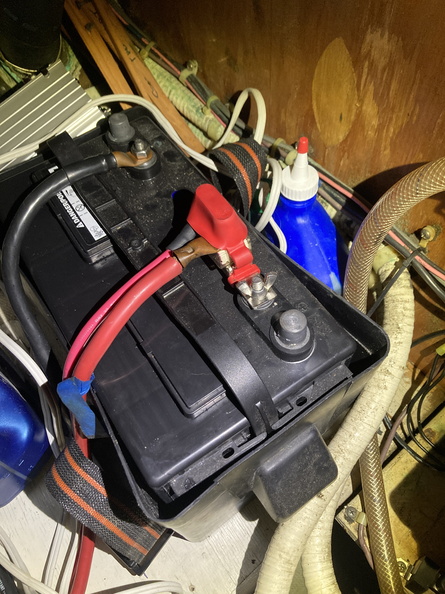
Over the previous few days we had a battery failure I still needed to address. The old engine start battery had finally given up and we had been using our house batteries to start the engine. The house batteries and engine get along just fine but I really wanted to replace the battery so the system operated like it was designed. I had called around and decided to get a battery at NAPA. So after leaving Kelli at the boat, I took the start battery out and hopped back in the dinghy. I motored down to the public marina, the closest spot to NAPA I could get, I used my new lock and cable to secure the dinghy. I then hoofed it with a 70-pound battery on my shoulder to NAPA and back.
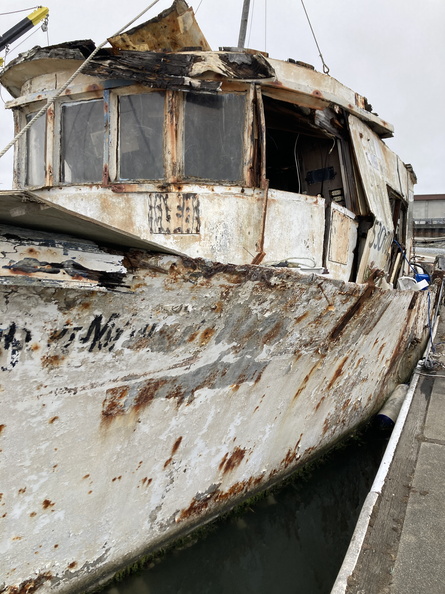
At the public marina was a half-sunk old boat I saw earlier in the day. I got a closer look this time around and realized was a ferro-cement boat. These things are weird. They are built by tying together a bunch of steel mesh into a boat shape then spending all day with a bunch of friends putting mortar all over the mesh until you have a solid hull. The problem is, cement/mortar isn't waterproof and the steel isn't rust proof. Eventually the boat starts dissolving and there is not good way to dispose of it. This one was listing badly and had a tree growing out of the side of it. But it was still floating even if just barely.
A short ride back to Elysian Sea and I installed our new battery. I fired up the engine to make sure the battery was operating properly then shut it back down. The plan was to get back underway the next morning and to do that we were missing only one thing... ice cream. There are some things that just don't seem to keep well on the boat and ice cream is one of those things. The freezer just isn't quite cold enough to keep it hard. We accidentally turned the freezer all the way cold on the trip and it started freezing things on the refrigerator side so I am sure it COULD get cold enough but the trade off of frozen vegetables just isn't worth it. So in the evening we made one more trip across the river and got some ice cream on the boardwalk. We heard some live music and took a little walk to find a band playing cover songs in Eureka's free summer concert series. We stayed for a few songs then called it a night.
The next morning was time to depart. We had become acquainted with our neighbors on the dock immediately next to us in a large motor yacht. They were headed back home to Seattle after five years of cruising in their boat. We discussed crossing the bar and they recommended 9am as a good time to get out. We cast off the dock lines at 8am and puttered down to the fuel dock to refill our tank with fresh liquid dinosaur. Tying up to the mini dock was no big deal and we ended up putting 75 gallons in the tank. Turns out I had more fuel than I thought! According to the reported fuel tank capacity, we still had 10 gallons of fuel. Our average fuel burn for the tank was .78 gal/hr. After paying the fuel bill equal to a half month's income (just a slight exaggeration) we puttered down the river toward the bar. We raised sail for the trip down river since we were still a little early to cross and were in no hurry. Our motor yacht neighbor passed us on the way out and let us know the bar conditions since they got out before us. About 9am we crossed the Humboldt Bay bar in benign conditions and set sail NW. Next stop, Bandon, OR.
We sailed for a while until the winds died down enough at about 6pm and we were only doing 2.5 kts. So we fired up the iron wind and got to it. Regaining some decent headway at 6.5 knots, we motored through the night. The next morning at 6am, the wind picked up enough and the sea became quite rough with wind driven swell from the NW and a lighter tide driven swell from the WSW. The seas were the biggest we had seen yet which isn't really saying much. They were about 10 feet and sometimes the swells built into larger waves. It was really cool to look out across the waves when we were in a trough and see what looked like a canyon of water. Then the swell would rise us up to the top and we could see for miles before dropping us down again to see only the wave in front and behind us or looking down the trough, we could see for almost a mile. The way waves build, they would sometimes create fairly steep slopes on one side or another. We would rise up with the wave, then fall off the other side. It was never dangerous since the waves weren't breaking, they only created a little spray on the tops from time to time when they were very steep and unstable. Having the sails out was a relief in that kind of sea since it gave stability to the boat from side-to-side. We would pitch up and down but we wouldn't roll very much.
All this angry sea state made me a little extra aware of our next bar crossing. Bandon (Coquille River Bar) doesn't have a staffed Coast Guard station. They used to have seasonal staffing there but currently there aren't enough coasties to go around so that station is unstaffed and therefore, unmonitored. There are no published bar reports or rescue services there if you mess up. I was monitoring bar conditions at the Coos Bay Bar 15 miles north but it turns out, they are very different bars. What I did have though, was a live webcam of the bar. It's pretty difficult to really tell the state of the bar from a camera but I was mainly looking for breaking waves at the bar entrance. You can see the camera here: https://www.portofbandon.com/coquille-river-bar-cam. As the day dragged on, the sea state died down a lot and the Coos Bay Bar continued to improve. I was hopeful we would get through easily. Near 6pm we were close to the bar entrance and doused sails. I didn't want to deal with sails as we entered the bar in case things went sideways (literally sideways.) We approached the bar and I realized... it was narrow! The Humboldt Bay Bar was a 10-lane freeway compared to this little two-lane road of a bar. As we motored in, the waves were breaking inside the north side of the bar and spraying off the southern jetty as the large swell piled into the breakwater. There's a lighthouse in Bandon and a group of people were videoing us motoring in; the sun was setting behind them and the orange sunset mixed with the spray was just beautiful. The swell built and built as we got further into the bar entrance. At one point, the waves were breaking... not curling over like a surfer loves but piling up so steep that they became unstable and just fell apart. That was the scariest part of the entrance. Kelli and I were both on deck with life jackets on and no phone in our hands (ahem.) I was standing high in the cockpit trying to keep the boat straight favoring the southern edge of the entrance, quickly turning the wheel back and forth as the waves outran us and tried to push us sideways. After a while the waves started to subside and the pucker factor eased to a moderate adrenaline dump.
We motored the short ways into the marina (which was also relatively small) and we consulted our cruising guide of where to dock the boat. No one was around and we picked a spot that appeared to be free. After getting tied up and shutting off the engine, the quietness of the marina gave no indication of the amount of energy being released in waves and swell just a short ways away at the bar entrance. Bandon was a very quiet, sleepy little down at 7pm and I was happy to enjoy the solitude.
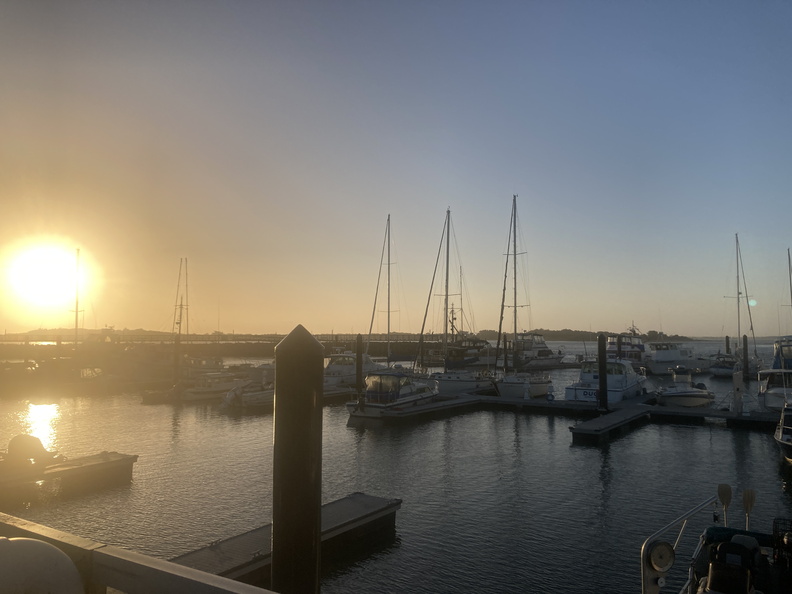
I decided to check Google Maps and realized there's a brewery just across the street from the marina. I told Kelli, "I'm getting a beer, do you want to come?" She quickly got ready and we walked across the street. Beer was a great way to unwind after that adventure.
Here's a video of a small fishing boat capsizing in the entrance on the way out to sea. If you watch closely, there aren't any big breaking waves so the boat seems safe but the suddenly they get hit by a few waves in a row. I think they were a little too far to the right (north) the entire time as well. https://www.youtube.com/watch?v=1h0oC9RpUjg
The next morning we took the tender across the river toward the lighthouse and beach we saw on the way in. We spent a few hours walking around and exploring. The lighthouse has a group of volunteers that open the lighthouse to visitors and they run a little gift shop inside the lighthouse to help with upkeep. The beach was long and shallow with tons of driftwood piled up against the dunes further ashore. I thought it would be a great place to leave the boat and it's about half the price of Coos Bay, but that bar entrance was trash and I didn't like the idea of fighting it every time we wanted to go sailing. We had arrived on Friday night and didn't see anyone on Saturday so we didn't know how to pay for our moorage. We peeled out of there about 4pm after watching the bar webcam and taking a little walk down the boardwalk to get an idea of the bar condition. It didn't appear bad so we gave it a go. We were trying to time our departure so we wouldn't have bad conditions in Bandon but with Coos Bay 15 miles away, we didn't want to get there so late the tide was heading out making poor crossing conditions; we essentially had to split the difference in timing between the two bars.
Leaving Bandon went pretty well. It still wasn't fun but it wasn't as bad as our arrival either. The sea state outside the bar was mellow compared to the day before and I'm sure that helped. We sailed northwest, using the wind we had. After a few tacks beating directly into the wind at 6 knots, I decided we needed to just get there so we didn't miss the tide. At 7:30pm we dropped sail and motored into Coos Bay. The Coast Guard station there was broadcasting bar reports and several boats were crossing the bar. I followed three fishing vessels that were headed in. Compared to Bandon, Coos Bay Bar was cake. We made it into the marina just after 9pm and tied up to the transient dock. We called it a night and went to bed under and overcast sky and mist.
So there our boat sits. We have a slip in Coos Bay. Turns out the marina has a bad silting problem and our boat is going to sit in the mud when the tide drops below -1' mean low water. It will be sufficient for the next year. There is a boatyard around the corner from the marina where we can haul out if we need to. The town has an airport with jet service so we can fly in. It's definitely more busy than Bandon but at least we can go sailing when we want (as long as we aren't sitting in the mud at low tide.) We spent a few days in Coos Bay walking the beach, finding curiously shaped driftwood, doing boat maintenance, and getting to know the area.
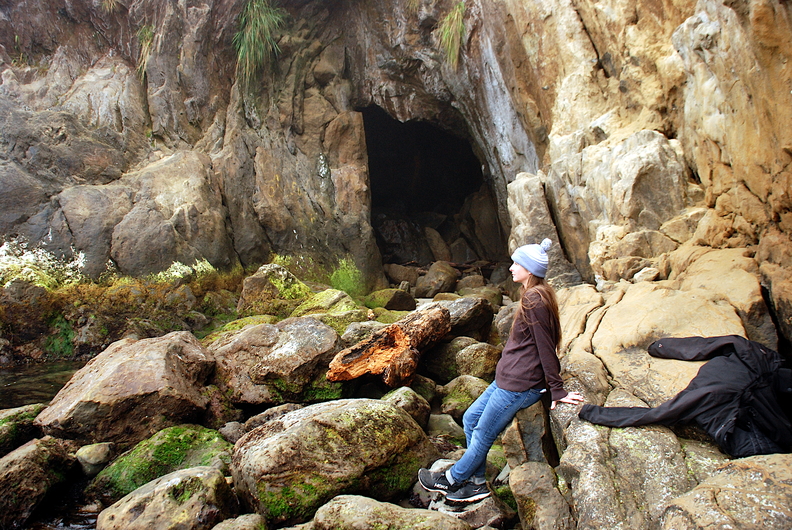
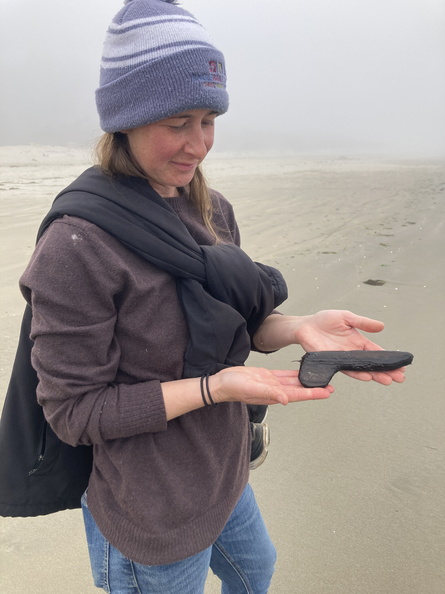
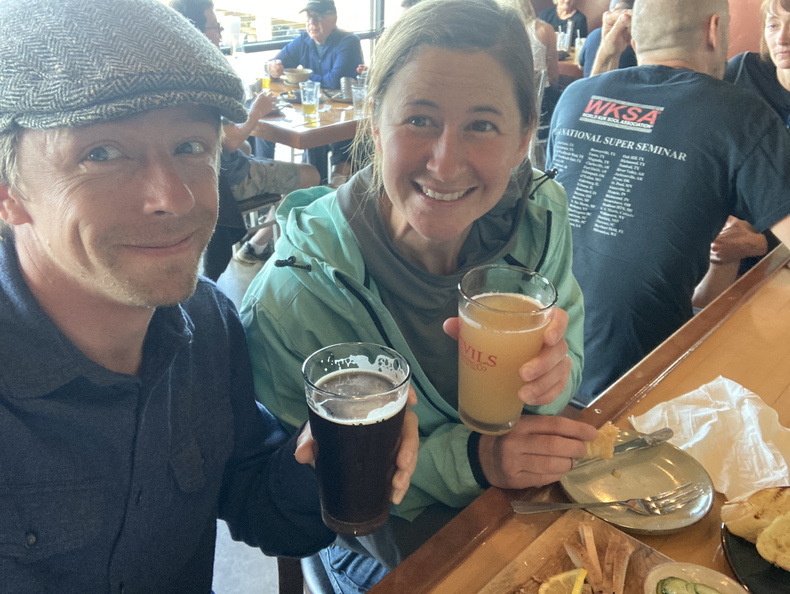
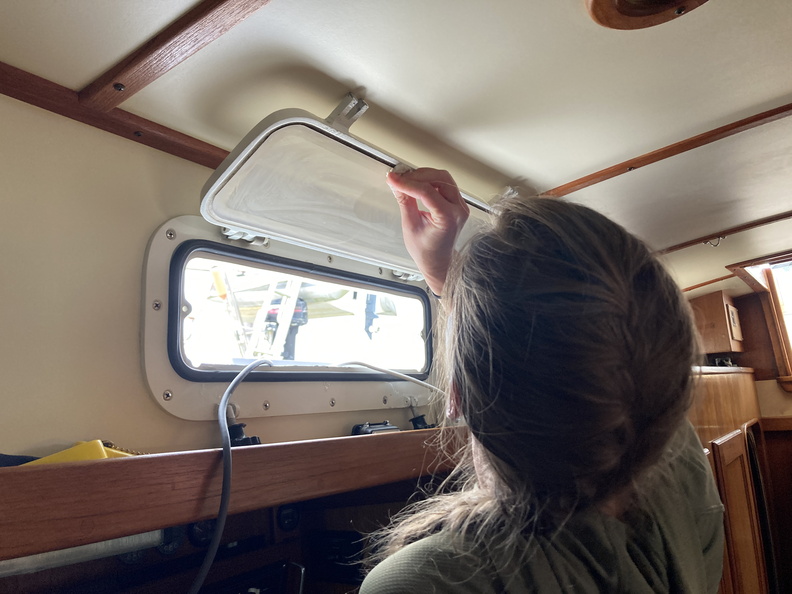
After several days in Coos Bay walking the beach, doing a little boat maintenance, setting up a dehumidifier and heater, and getting to know the area, we put the boat to bed, rented a car, and drove two days home to Utah. Upon arriving in Utah we were greeted with smoke, ash, extremely low humidity, and high temperatures. My sinuses hated me that first week and they still haven't fully forgiven me for the shock of going from cool weather and sea breezes to the torture of a southwest summer.
I guess I'll have to apologize to my body by heading back to Coos Bay sooner rather than later.
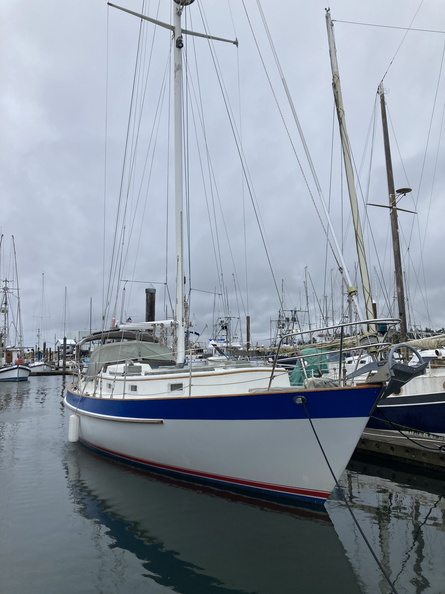
P.S. I called the Bandon Port Authority and paid my dock fee a month later. They thought I was crazy to call and pay since there was no record of my visit but it was a nice facility in a nice town so I wanted to make sure it stayed funded by paying my dues.